


Heather Jeffcoat Once Again Featured by PopSugar
In this latest article by Maggie Ryan, they once again contacted our own Heather Jeffcoat, DPT, this time for her expert opinion on pilates crunches for toning your lower abs.
“I’ve been doing a lot of Pilates lately, and my abs are really liking all the new moves. One core exercise I really didn’t see coming? Pilates double toe taps, a simple crunch variation done on your back that lit up my lower abs.“
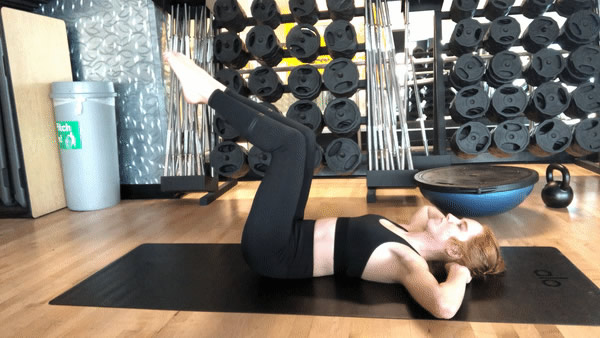
Pilates Double Toe Taps
Double toe taps actually work your transverse abdominis, according to Heather Jeffcoat, DPT, a physical therapist and BASI-certified Pilates instructor at Fusion Wellness & Physical Therapy, which are your “deep core” muscles involved in stabilizing your low back and pelvis.
I love this exercise as prep to do the double leg stretch,” also known as double leg lifts, Heather told POPSUGAR. “This bent-knee version allows for a shorter lever arm and is therefore less challenging on the core than a double leg stretch.” So once you’ve collapsed after a set of double toe taps, just remember that there’s an even harder move out there, ready to make your abs burn even more!
Want to try this move yourself? For beginners, Heather recommends building up your endurance by holding the starting tabletop position for two minutes. Then, progress to alternating toe dips (dropping one foot at a time) before attempting the full move.